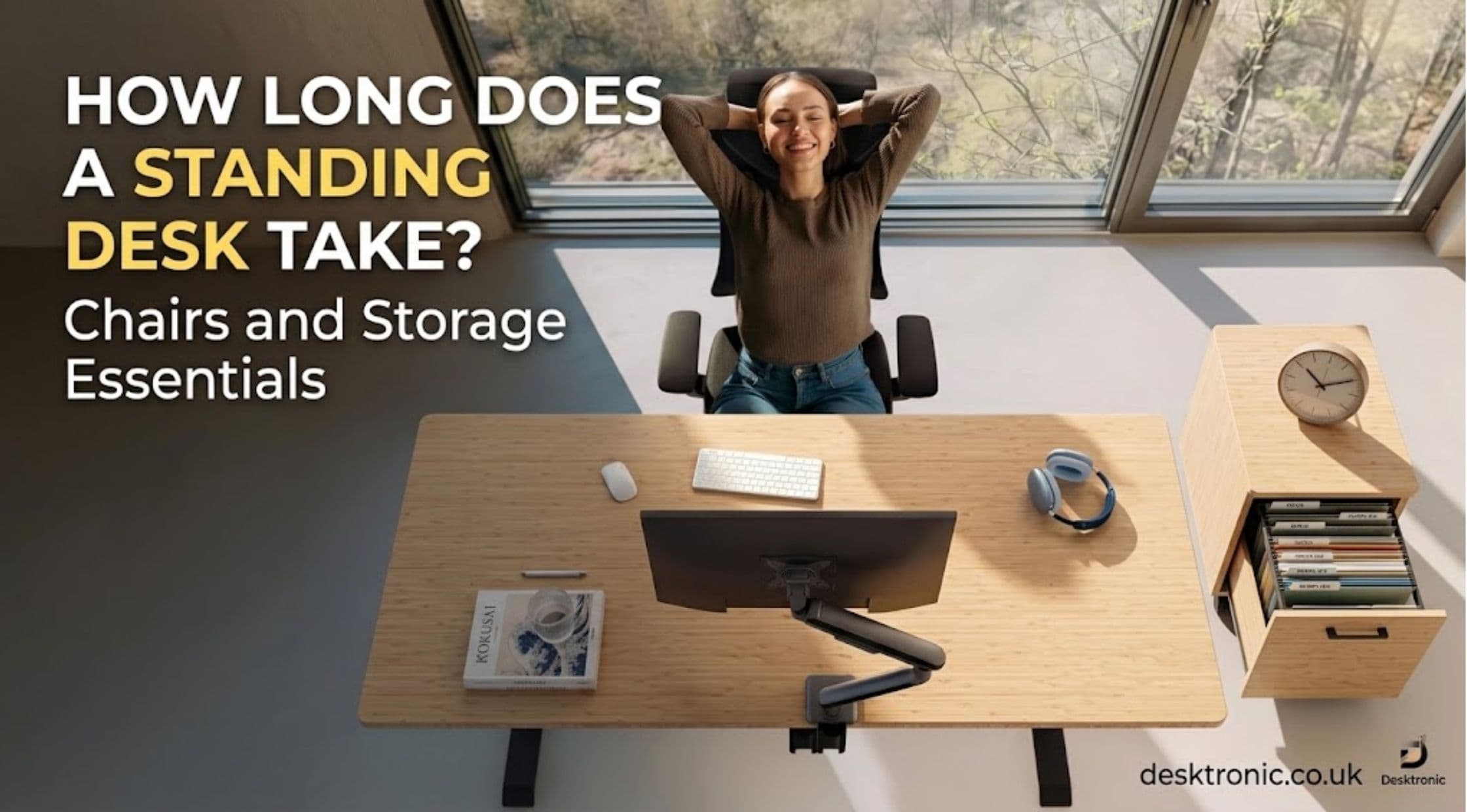
Creating a comfortable workspace often involves choosing the right furniture and understanding how it fits into a daily routine. Standing desks, ergonomic chairs, and compact storage solutions can each influence how a workspace functions. However, their setup requirements and practical benefits differ.One common question is how long does standing desk take to assemble or adjust. The answer depends on the desk design, assembly experience, and whether assistance is available. Planning for seating and storage at the same time can also help create a more organized workstation.
How Long Does a Standing Desk Take to Assemble?
The time required to assemble a standing desk varies by model. Some desks have relatively simple frames, while others include electric lifting mechanisms, control panels, and cable-management components.A basic assembly may take around 30–60 minutes, while more complex models can require one to two hours or longer. These are general estimates rather than guaranteed times for a specific desk.
Several factors can affect the process:
- Desk design: Electric standing desks may have more components than simpler models.
- Assembly instructions: Clear instructions can make each step easier to follow.
- Available tools: Having the recommended tools ready can reduce interruptions.
- Assistance: Some large desktops and frames are easier to position with another person.
- Workspace preparation: Clearing enough floor space helps prevent unnecessary repositioning.
After assembly, an electric desk may also need a basic function check. The user should confirm that the lifting mechanism moves correctly and that cables remain clear of moving parts.Desktronic offers standing desks and workspace furniture for different office arrangements. The Desktronic is a useful starting point for reviewing desk models and their assembly information.
Why Ergonomic Chairs Matter
An adjustable desk alone does not create a comfortable workstation. Seating also plays an important role, particularly when desk-based tasks involve extended periods of sitting.Ergonomic chairs are designed to support posture through features such as adjustable seat height, backrests, and lumbar support. Depending on the model, they may also include adjustable armrests or reclining functions.The most suitable chair allows the feet to rest comfortably while keeping the shoulders relaxed. The backrest should support the lower back without creating uncomfortable pressure.Seat height should also work with the desk surface. When typing, the elbows should remain close to the body, with the forearms positioned comfortably.Chair selection should reflect individual needs rather than appearance alone. A chair with many adjustments may be useful, but those adjustments matter only when they help achieve a comfortable position.
Combining a Standing Desk with an Ergonomic Chair
Standing desks allow users to alternate between sitting and standing during the workday. This flexibility can help break up long periods in one position.A compatible ergonomic chair remains useful for seated tasks. The Desktronic chair should adjust to a suitable height when the desk is configured for sitting.Alternating positions should be comfortable rather than forced. Standing for excessive periods can also cause discomfort, so gradual changes and regular movement are sensible.Monitor height, keyboard placement, and foot positioning remain important in both sitting and standing positions. The goal is to maintain a workable setup that supports different tasks throughout the day.
What Is an Undermount Desk Drawer?
An undermount desk drawer attaches beneath the desktop instead of occupying space on its surface. It offers a convenient location for small office essentials, including stationery, notebooks, cables, and other accessories.This design can be particularly helpful in compact workspaces. Keeping frequently used items below the desk frees up room for a monitor, keyboard, and writing materials.
Before choosing an undermount desk drawer, several details deserve attention:
- Available clearance: Check the space between the desktop and the user's knees.
- Drawer dimensions: Confirm that its measurements suit the desk.
- Mounting method: Ensure the desktop supports the required installation.
- Storage capacity: Match the drawer size to the items it needs to hold.
- Desk movement: For electric standing desks, make sure the drawer does not interfere with the lifting frame or moving components.
A drawer should improve organization without reducing legroom. Measuring the underside of the desk before purchasing can help avoid compatibility problems.
Creating a More Practical Workspace with Desktronic
Desktronic offers desks, chairs, and accessories designed for home and office workspaces. Its product range can help shoppers consider furniture and storage as parts of a coordinated setup.A standing desk can provide height flexibility, while an ergonomic chair supports seated work. An undermount drawer can handle smaller items that might otherwise clutter the desktop.The best combination depends on available space, working habits, and equipment requirements. A compact workstation may need only a desk, suitable chair, and one storage accessory. Larger setups may benefit from additional cable management or monitor-positioning equipment.The Desktronic is a starting point for exploring accessories that may complement a desk. Product dimensions and compatibility should be checked before ordering.
Final Thoughts
Understanding how long a standing desk takes to assemble makes workspace planning easier. Actual assembly time depends on the model, instructions, and available assistance.Ergonomic chairs contribute adjustable seating, while an undermount desk drawer provides storage without occupying the main desktop. Together, these furniture choices can support a more organized and adaptable workspace.Desktronic provides options for shoppers exploring desks, chairs, and accessories in one place. Reviewing specifications and measuring the available space before purchasing helps ensure each item suits the intended setup.